
Budapest Forum 2026 – Resilient Democracies in a Fractured World
2026-10-08
The sixth edition of the Budapest Forum, the joint event organized by the CEU Democracy Institute, the Municipality of Budapest, and Political Capital Institute focused this year on the dynamics of democratic renewal after illiberalism, the changing global security environment, and Europe’s challenging political future.
Keynote speech + panel discussion: Resilient Democracies in a Fractured World
Keynote: Zoltán Tarr, Minister of Social Relations and Culture of Hungary
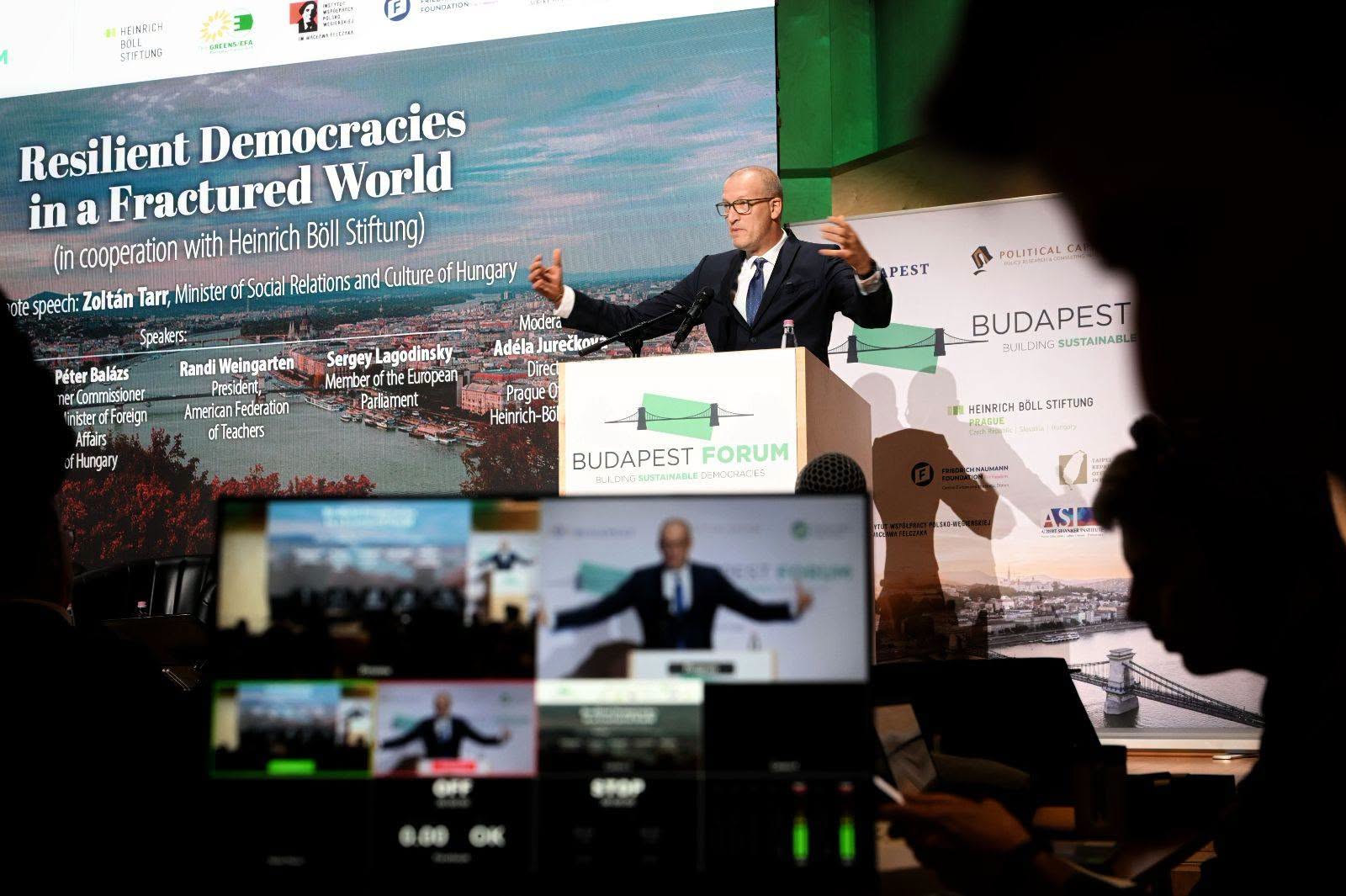
Main takeaways from Zoltán Tarr’s keynote speech
- The 2026 political transition offers Hungary a historic opportunity to break with a long history of defeat and subordination. This year, the 500th anniversary of the Battle of Mohács recalled a defeat that shaped Hungary for centuries, while the 70th anniversary of the 1956 Revolution recalled the struggle for freedom. Against this historical background, the 2026 election marked another attempt to take the country’s future into its own hands.
- Years of resistance and broad social cooperation made the election result possible. People who had rejected the Orbán regime’s hegemonic approach, which sought to impose a single solution across all areas of society, eventually found a way to work together, despite a political and legal structure designed to make change extremely difficult.
- The new government and Hungarian society now face the difficult task of replacing a culture of hatred, in which people with different views were treated as enemies, with a culture of understanding, listening and acceptance of differences. The electoral campaign brought people together around the shared goal of political change, but freedom has also brought back competing opinions and conflicts. Learning to navigate these differences with greater tolerance is part of the democratic transition.
- Rebuilding democracy cannot mean simply returning to an earlier model. Democratic institutions face broader challenges across Europe and beyond, so Hungary needs to innovate as it rebuilds them. One of the government’s key challenges is to develop a more participatory democracy in which citizens help define problems, identify possible next steps and formulate the questions on which decisions are based, while elected representatives continue to make the final decisions.
- Citizens also expect the government to get things done. Part of the success of populist movements comes from speaking directly about problems affecting everyday life, something democratic politicians also need to learn to do more effectively. Citizens want visible changes in their everyday lives, not only ideological or theoretical debates. This requires continuous dialogue, clearer political communication and direct contact between political leaders and citizens.
- The best way to defend democracy is not simply to preserve it, but to renew it. Hungary can use the democratic transition as a laboratory for listening, participation and democratic innovation.
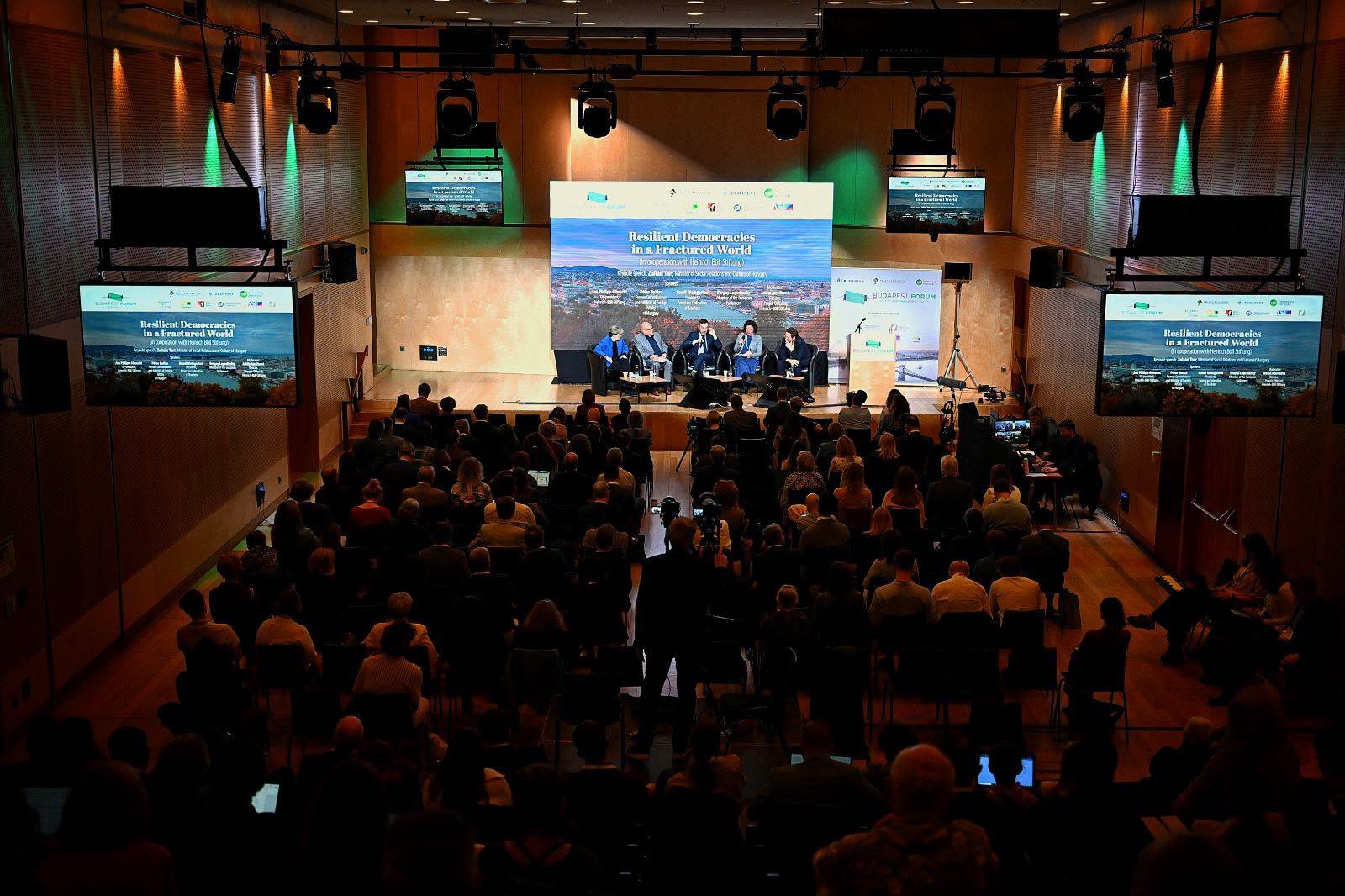
Speakers
- Jan Philipp Albrecht, Co-president, Heinrich-Böll-Stiftung
- Péter Balázs, Former Commissioner and Minister of Foreign Affairs of Hungary
- Sergey Lagodinsky, Member of the European Parliament
- Randi Weingarten, President, American Federation of Teachers
- Moderator: Adéla Jurečková, Director, Prague Office of Heinrich-Böll-Stiftung
Main takeaways from the panel discussion
- Hungary’s experience shows that illiberal and corrupt regimes are reversible, but electoral change only begins democratic reconstruction. Rebuilding democracy also requires dealing with institutional, financial and geopolitical legacies of the previous system, including external dependencies.
- Democratic resilience requires functioning institutions, security and the ability to deliver. Inequality, economic insecurity and ineffective government can weaken trust, so citizens need to see that democratic participation produces tangible results. Resilience also requires preparedness for both geopolitical aggression and recurring climate-related crises.
- Pluralism and civic participation are central to resilience. Democracies need open disagreement without turning opponents into enemies, while local engagement, civil society, trade unions, political parties and voting give citizens agency and responsibility.
- Education should strengthen curiosity, critical thinking, relational skills and the ability to navigate disagreement, while fostering pluralism and social solidarity. Democratic education should extend beyond young people to all generations and involve public education, civil society and political actors.
- Democracies also face an intellectual challenge. Liberal democracy no longer has the intellectual monopoly many once assumed, while illiberal and authoritarian actors promote counter-models built around traditional values, challenges to universal human rights, post-colonial arguments and multipolarity. Democracies therefore need to build a new intellectual foundation.
- Democracies need to reconnect with citizens, but different approaches emerged on how to do so. New messages and programs can help prevent voters from abandoning the political centre; at the same time, democracies need above all to prove that they can deliver. People also need a cause they can root for and find joy in.
- The digital environment adds further pressures. Disinformation, misinformation and propaganda can spread rapidly, while algorithms amplify simple answers, fear and hatred. AI can also encourage “cognitive offloading” and substitute for knowledge and critical thinking. Europe should enforce the DSA and DMA, while the upcoming Digital Fairness Act should address addictive design and manipulation without undermining a free internet and young people’s access.
- Many of these challenges require cooperation beyond the national level. Democracies need a Europe capable of acting and stronger cooperation with democratic partners. At the same time, local engagement, responsibility across the democratic political spectrum and, above all, the ability to deliver can help rebuild trust and strengthen democracy.
This panel discussion was co-organized with the Heinrich Böll Stiftung.
Explore all the panel discussions from Budapest Forum 2026 here.

Copyright 2026. Political Capital Policy Research and Consulting Institute, all rights reserved.