
Budapest Forum 2026 – Opening speeches: Péter Krekó, Carsten Q. Schneider, Gergely Karácsony
2026-10-08
The sixth edition of the Budapest Forum, the joint event organized by the CEU Democracy Institute, the Municipality of Budapest, and Political Capital Institute focused this year on the dynamics of democratic renewal after illiberalism, the changing global security environment, and Europe’s challenging political future.
Key takeaways from the welcome address by Péter Krekó, Director of Political Capital Institute
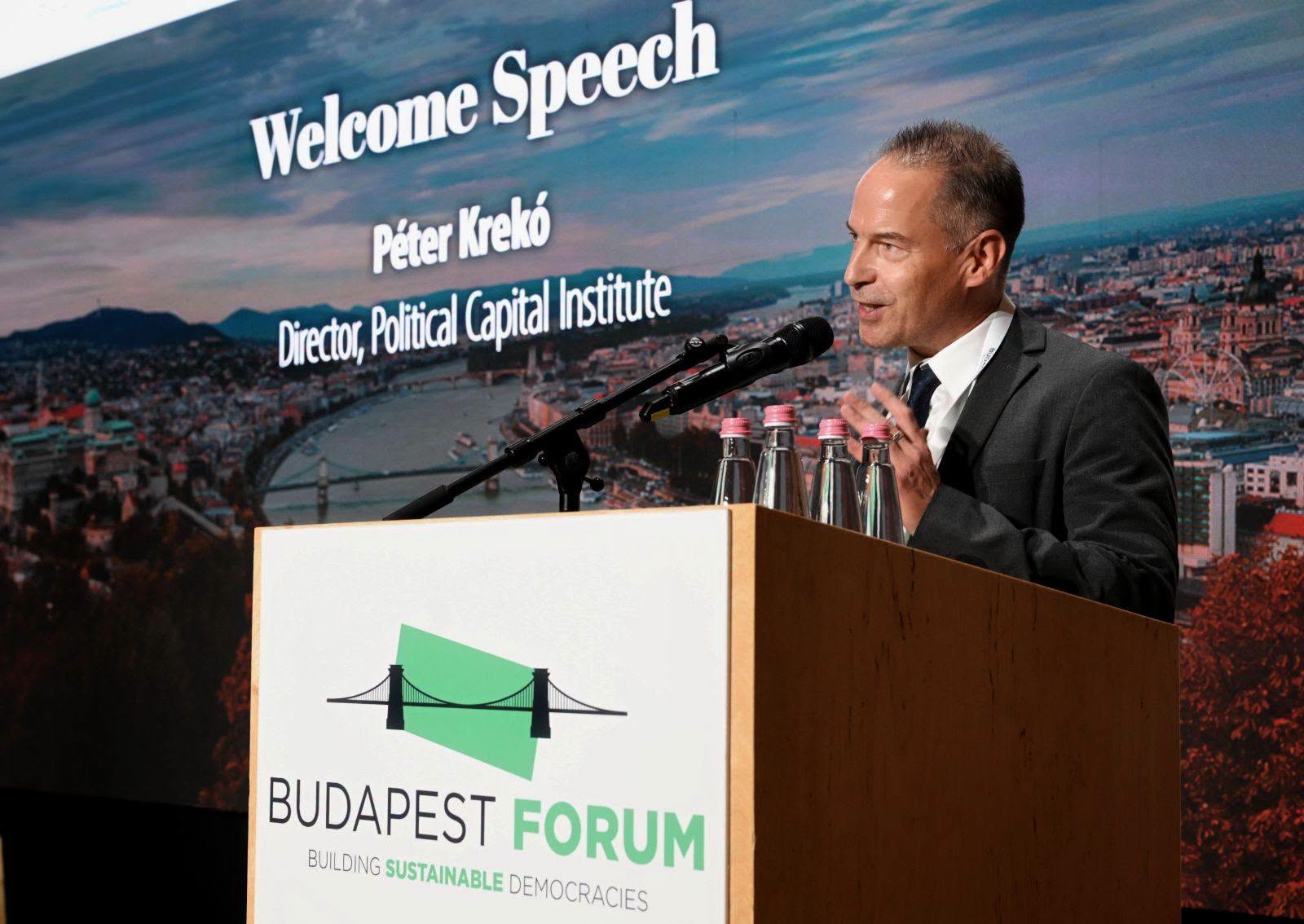
- Hungary is now being seen as a positive example of democratic change, demonstrating that political change is possible even after 16 years of uninterrupted Fidesz rule.
- However, winning an election is only the beginning. The much greater challenge is rebuilding independent institutions, restoring checks and balances and the rule of law, and rebuilding public trust.
- Hungary must strengthen democracy while avoiding a new cycle of revenge, polarization, populism and tribal politics, and instead create a genuinely pluralistic democratic system.
- These challenges extend far beyond Hungary. The Budapest Forum will explore democratic mobilization, resistance to authoritarian pressures and disinformation, and how democracies can successfully rebuild after political change.
Main takeaways from the keynote speech by Carsten Q. Schneider, Interim President and Rector, Central European University
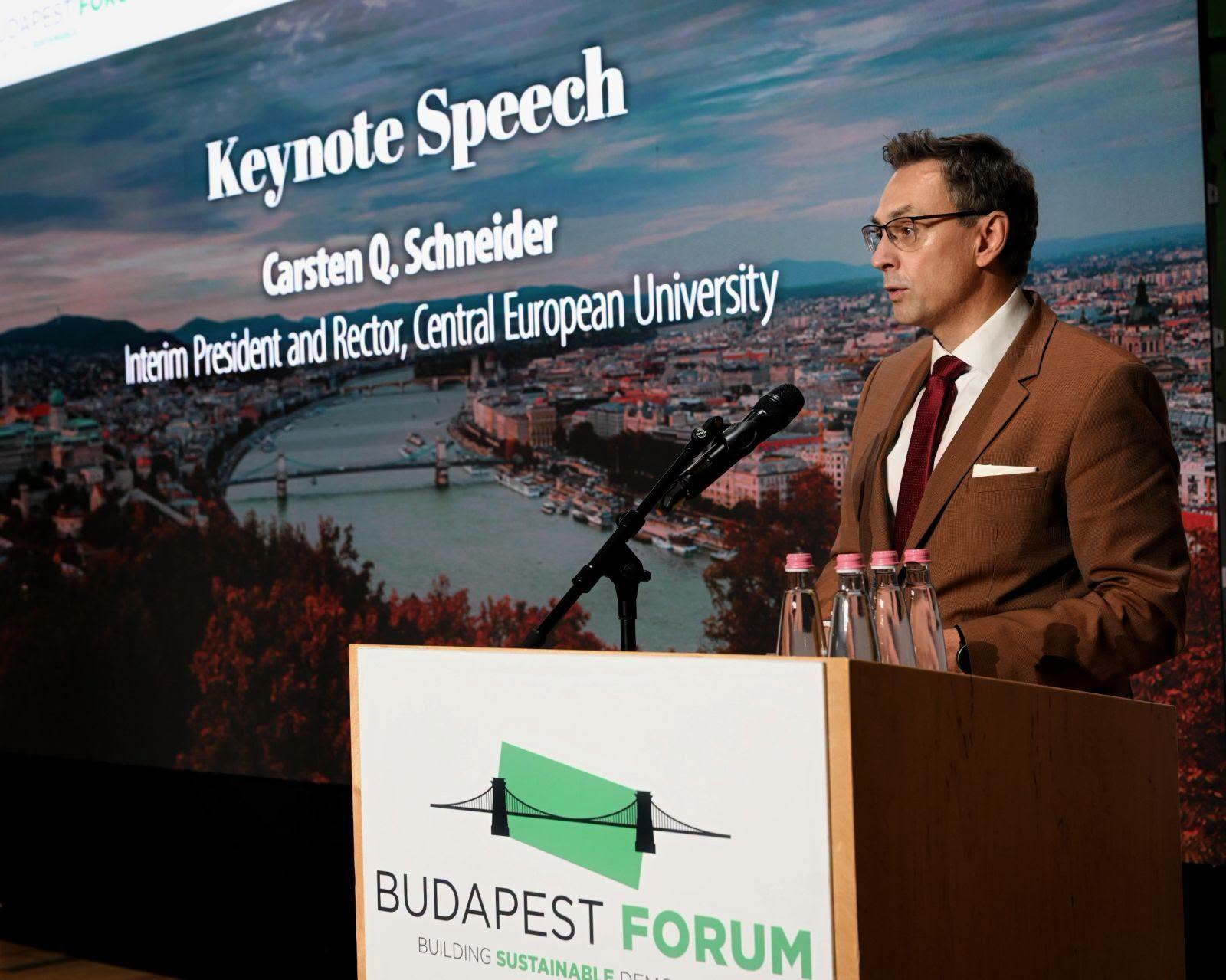
- The structural foundations of 20th-century liberal democracy have permanently collapsed. Carsten Q. Schneider argues that key pillars of democracy's "Golden Age" - such as coherent mass political parties, high-quality public debate led by traditional media, and sovereign economic control by national governments – no longer exist due to globalization, technological shifts, and post-Fordist hyper-individualism.
- Reverting to old political models is a dysfunctional strategy. Simply attempting to "restore" previous democratic institutions is inadequate because those very structures proved unable to address modern societal needs; liberal democracies must evolve and create entirely new theoretical and practical frameworks.
- Hungary is emerging as a critical laboratory for 21st-century democratic innovation. Having previously served as a pioneer for illiberal regimes globally, Hungary may now act as a front-runner for new forms of liberal democracy, driven by novel movements like TISZA that combine hyper-personalized leadership, direct grassroots mobilization, and broad-tent coalitions.
- New political movements face serious organizational and ideological risks. Schneider raises critical questions about whether emerging "big-tent" movements can perform the traditional functions of mass parties, highlighting risks surrounding their long-term stability, their capacity to train political personnel, and the threat of similar models being co-opted by far-right actors.
- Democratic renewal requires directly confronting neoliberal economics and multi-level governance. Drawing on Karl Polanyi, political liberalism cannot survive without mitigating the extreme wealth inequality generated by disembedded market capitalism, while carefully balancing power across national governments, municipal autonomy, and the European Union.
Main takeaways from the keynote speech by Gergely Karácsony, Mayor of Budapest
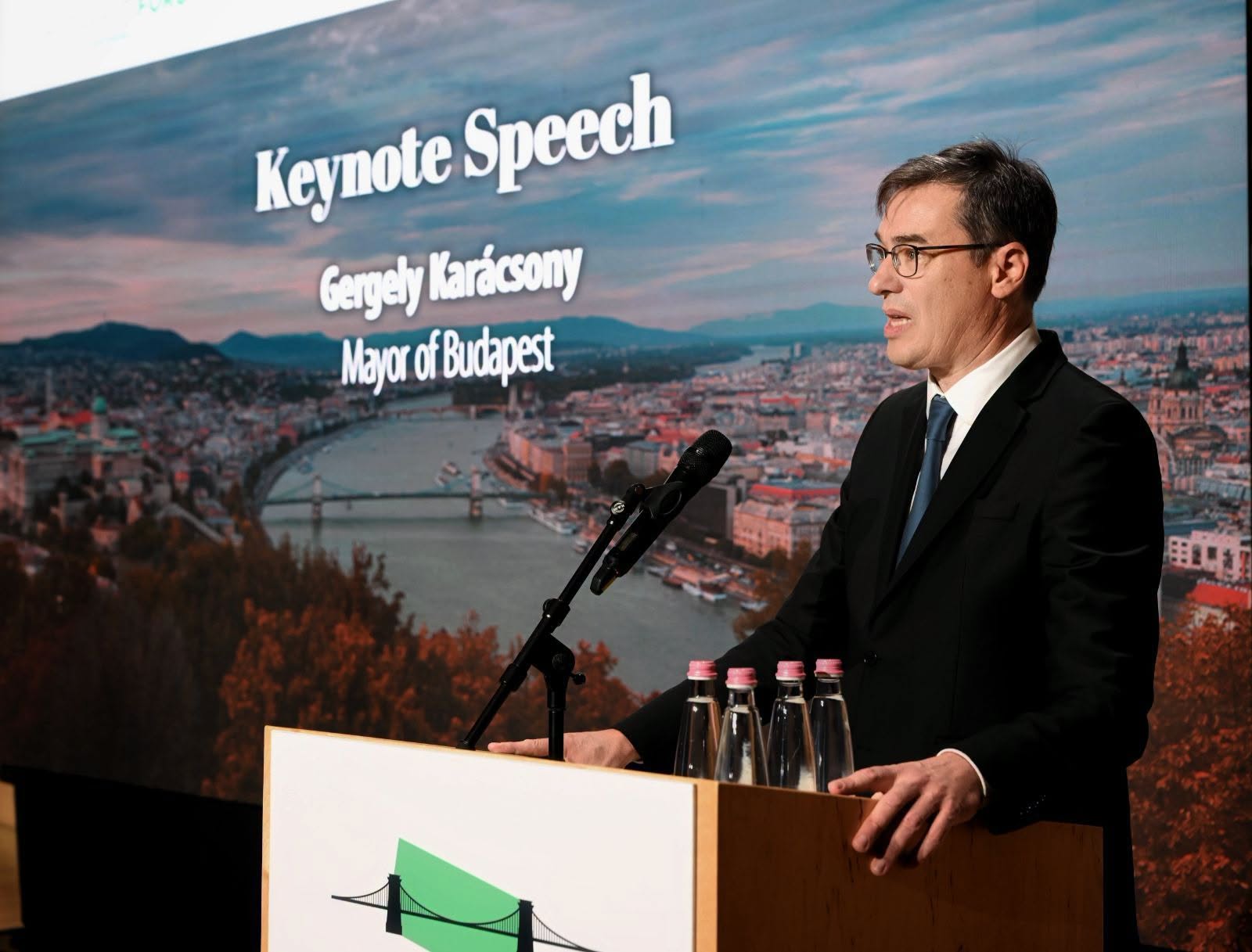
- The collapse of Viktor Orbán’s regime opens a new chapter for democratic restoration. After 16 years of autocratic rule, the dismantling of Orbán’s power network allows Hungary to shift its focus from merely resisting authoritarianism to actively rebuilding independent democratic institutions and checks and balances.
- Disproportional electoral systems pose a fundamental threat to democratic stability. Disproportional voting mechanics undermine the core principle of political equality, enabling authoritarian leaders to secure supermajorities with minority support, though such systems can eventually backfire when societal discontent reaches a boiling point.
- Institutional repairs ("hardware") are meaningless without addressing socio-economic conditions ("software"). Re-establishing democratic guardrails and courts will fail to secure long-term stability unless democratic leaders rebuild public trust by addressing the material inequalities that alienate citizens from liberal values.
- Unchecked hyper-globalization eroded the post-war democratic compromise. The shift of income and power from workers to the super-rich has destroyed social solidarity across Western nations, creating the primary breeding ground for modern authoritarian populism.
- The European Union must reclaim democratic sovereignty from global capitalism. Individual nation-states lack the capacity to counter global market forces independently; the EU must redefine its primary mission around fostering social solidarity, protecting citizens, and strengthening local municipal autonomy.
Explore all the panel discussions from Budapest Forum 2026 here.

Copyright 2026. Political Capital Policy Research and Consulting Institute, all rights reserved.